retrieval · LLM
causal & statistical models
encoded method
persistent context
Nucleus
the client owns
the decision
the client owns
the decision
Two billion years before the market repriced consulting, a single bacterium filled the sky with a new abundance — and the life engineered for its scarcity died in the surplus. Three specimens, three tests, on what separates the firm that metabolizes a technology from the one it poisons.
The bacterium, the organelle, the lichen — were never the real subject.
They are specimens in an older argument about technological change: how a living system converts a new abundance into consequence before the window closes — and who pays to keep the new capability alive once it is inside the body.
The deciding question is whether the operating model can turn a new abundance into legitimate capability before its scarcity premium decays — and whether it can afford what it just internalized.
~2.4 billion years ago, cyanobacteria learned to run on sunlight and water and exhaled a waste product: oxygen. Free, ambient, and lethal to the life optimized for its absence. Most of the biosphere did not adapt. It was repriced to zero — the Great Oxidation Event, the largest extinction before there were animals to notice.
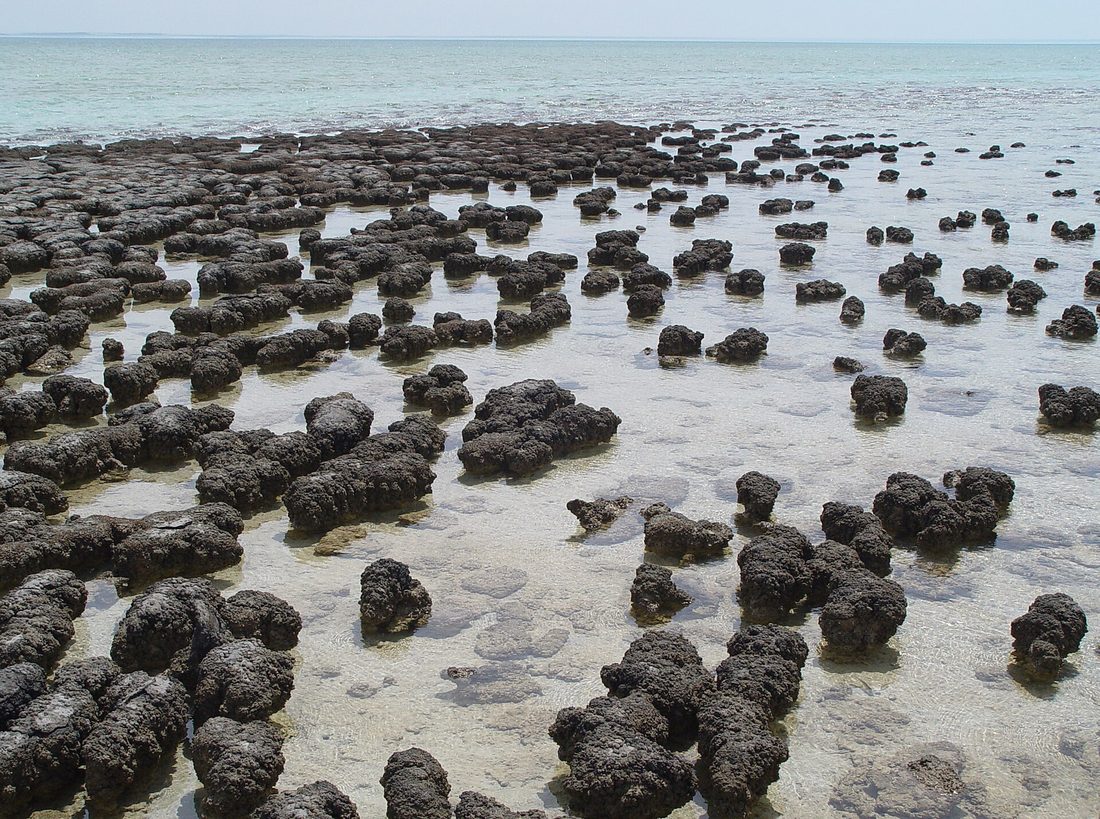
Cyanobacteria were the first organisms to run oxygenic photosynthesis. For hundreds of millions of years the oxygen they produced was absorbed by dissolved iron, rusting the oceans into the banded iron formations we still mine. Only once that sink was full did free oxygen enter the air.
The lesson is timing, not chemistry: the abundance had been accumulating invisibly for ages before it became decisive — free to ignore until, suddenly, it was the whole environment.
Anaerobes ruled a world where usable energy was hard-won. Their entire architecture assumed the air would never change — scarcity was the moat.
Photosynthesis made energy cheap and everywhere. The moat — the difficulty of assembling energy — drained without a battle.
Oxygen did not kill the anaerobes because it was rare. It killed them because it was everywhere. The premium became the toxin.
The anaerobes were not weak. They were superbly adapted to a world that had stopped existing. Competence is not fitness.
The consulting pyramid is an anaerobe; cheap synthesis is the oxygen. The error is not that its people are weak — it is that its metabolism assumes information stays scarce. Bolting AI onto that metabolism is only breathing faster in poisoned air.
When the scarce input your margin rests on becomes ambient, what exactly are you still charging a premium to supply? Name it in one sentence.
If you cannot — the market already has, and it has priced it at the cost of the electricity.
A larger cell engulfed a free-living bacterium and, instead of digesting it, kept it. That captive became the mitochondrion — the power plant inside every complex cell alive. It was the best deal in the history of life. It was also never free.
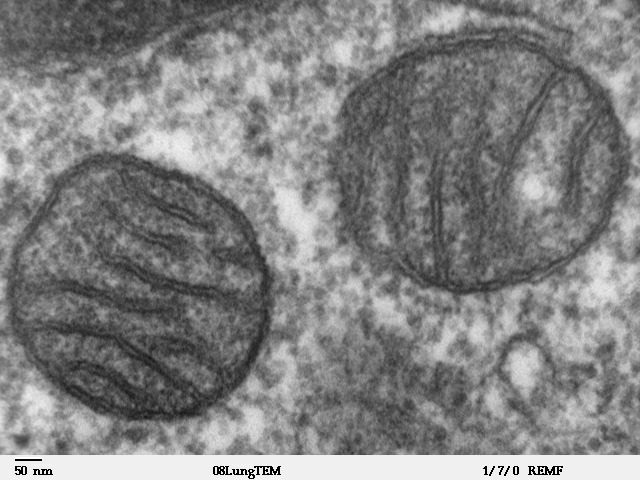
Endosymbiotic theory — argued into the mainstream by Lynn Margulis against decades of resistance — holds that mitochondria and chloroplasts descend from once-independent bacteria. The evidence is that they still carry their own DNA and replicate on their own schedule inside the host.
That retained genome is the tell. The host did not acquire a free tool. It acquired a second thing to keep alive, for as long as it lives, at its own expense.
And to run efficiently it shed almost everything else — the mitochondrion kept only a handful of its thousands of ancestral genes. You cannot internalize a capability and carry the old machinery around it at the same time. Integration is subtraction first.
The host stopped buying energy from the environment and internalized the producer. Build, not buy. In the moment, an obvious win.
The mitochondrion kept its own DNA. The host inherited a genome to maintain and replicate — a permanent internal obligation it did not have before.
When that upkeep fails, the whole system it powers degrades. Mitochondrial disease is what a maintenance default looks like at the scale of a cell.
This bargain produced the complex cell essentially one time in two billion years. Every other engulfment ended in digestion, not an organelle.
Building your own AI capability is endosymbiosis. Year one, you keep the savings. Year two, you meet the second genome — model churn, evals, guardrails, drift — the upkeep you signed for the day you swallowed the tool. The opex you cancelled returns as a genome you now maintain alone.
Before you approve the build, price year two — not the build. Model deprecation, evaluation, drift, and the write-down when it is superseded.
Who owns the second genome when the model it was born on is retired?
A lichen is not one organism. It is a fungus and an alga in a contract so tight it looks like a single body. The alga makes food from light; the fungus makes a body and holds water. Neither survives the other’s habitat alone — which is why the partnership colonizes bare rock where nothing else will grow.
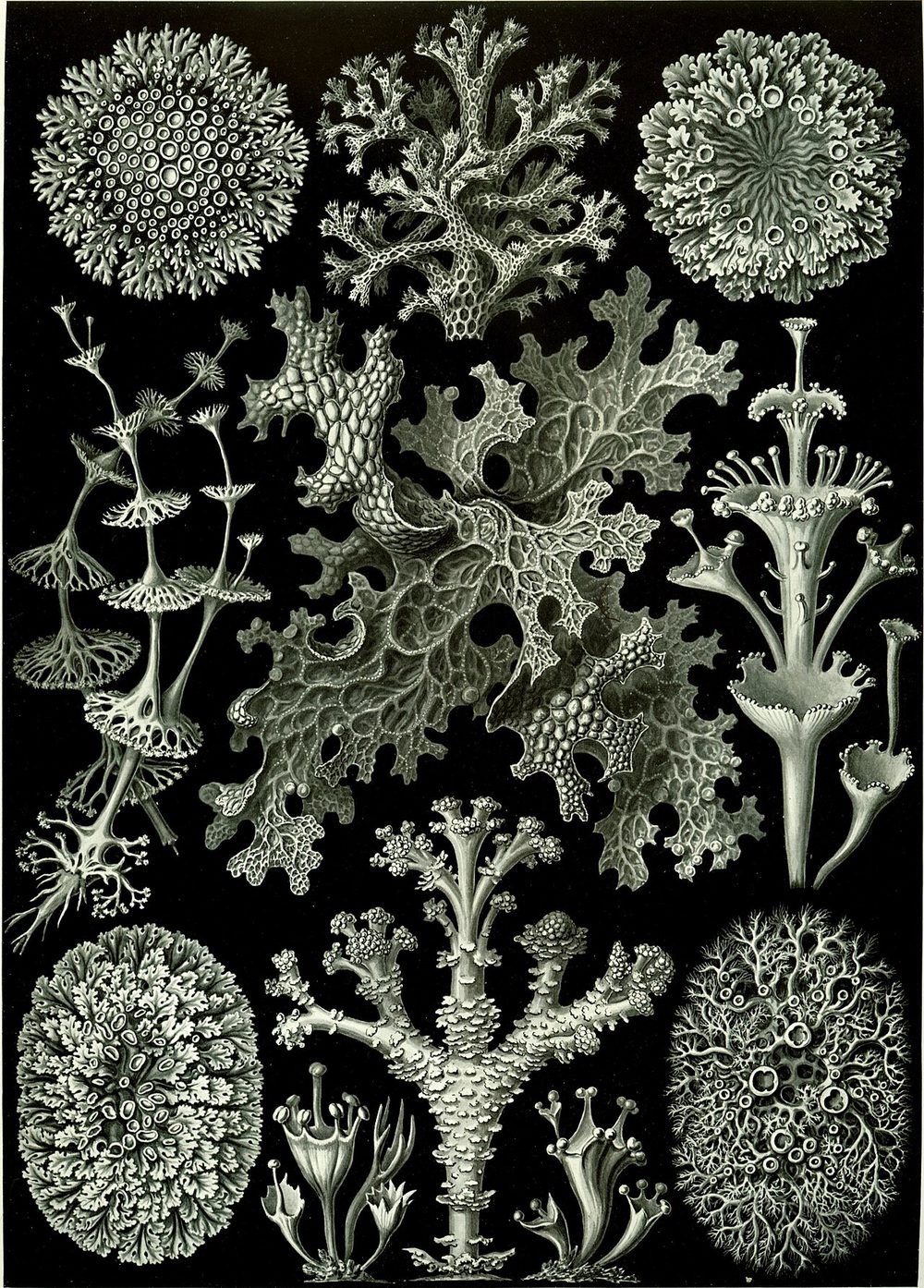
Lichens are pioneer species: they arrive first on lava, tombstone, and tundra because between them the partners carry a capability the environment rewards and no solo organism supplies there. The relationship is not sentimental — it is renegotiated every season by whether each partner still earns its place.
Stress the contract and it can tip: under some conditions the fungus behaves less like a partner and more like a controlled parasite on its alga. Mutualism is a position on a gradient, not a fixed identity.
Each partner supplies what the other cannot cheaply self-produce. Remove that, and the relationship is parasitism waiting to be shed.
A symbiont that only extracts — that lives on the host’s inability to see it clearly — is tolerated only until the host can do better. Then it is digested.
The lichen colonizes bare stone because it carries a capability the new surface rewards and the host still lacks. Embeddedness is the head start — if spent on capability, not rent.
The mutualist earns its place each season. It does not lock the host in; it stays because leaving would cost the host more than keeping it.
The embedded firm is a symbiont in a host that can suddenly go it alone. Defending billable hours is parasitism the client will shed the moment AI lets it. The move is to supply what the client still cannot cheaply self-produce — persistent context, encoded method, sustained judgment — and to be designed to disappear where it no longer adds.
Remove every task AI has just made cheap for the client to self-produce. What remains that only you supply?
That remainder is the whole relationship. Everything else is on borrowed time.
The oxygen catastrophe did not only kill. It made the eukaryotic cell possible — compartmentalized, with specialized organelles each doing the one thing it is built for, and a nucleus that keeps sovereign control. It is the operating model the consulting series is reaching for, drawn 1.8 billion years before anyone needed the diagram.
The client owns its data, its decision record, and the decision itself. The provider never holds the sovereignty.
Retrieval, rules, statistical and causal models, encoded method — each bounded to the one thing it is built for. Judgment is not smeared across all of them.
Persistent context is the internalized power plant. It compounds — and carries the year-two upkeep from Gallery II. An organelle, not a subscription.
What crosses in and out is negotiated. The provider stays inside the wall only where it supplies what the host cannot make itself.
Endosymbiosis produced the complex cell exactly one time in the whole history of life. Every other attempt was digestion or disease.
That is the honest edge of the analogy, and of the thesis: internalizing a new capability almost never produces a working organelle. The wager underneath all of it is narrow — building gets cheap while sustaining stays hard.
If sustaining also goes to zero, there is no organelle and no premium — only a cell that swallowed something it cannot keep alive. Watch that condition. It decides whether any of this is biology, or just weather.